


Does Noah’s Ark exist, and could its ancient remains still lie hidden beneath the rugged terrain of eastern Turkey? For generations, explorers, theologians, and scientists have looked toward the majestic peaks of Mount Ararat and the surrounding highlands, searching for physical evidence of the legendary vessel that weathered the global deluge. Recent scientific expeditions are breathing new life into this age-old debate, pointing toward a remarkable geological feature known as the Durupınar Formation.
Unveiling the Durupınar Formation
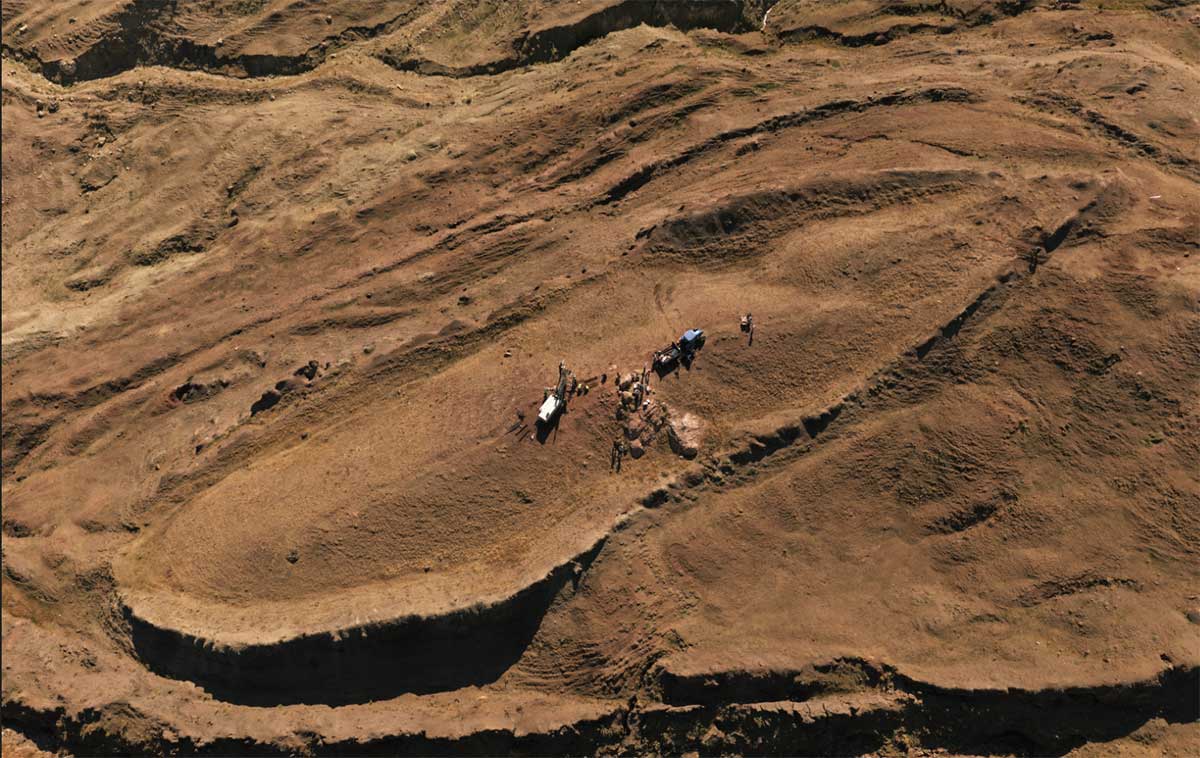
Situated in the mountainous terrain near Mount Ararat, the Durupınar site features a distinct, boat-shaped geographic contour matching the exact length dimensions specified in ancient accounts. Measuring approximately 300 cubits long, the formation has puzzled geologists and historians for decades. Genesis 8:4 records, “And the ark rested in the seventh month, on the seventeenth day of the month, upon the mountains of Ararat.”
Genesis 6:15 further outlines the precise structural blueprint dictated for the vessel: “And this is the fashion which thou shalt make it of: The length of the ark shall be three hundred cubits, the breadth of it fifty cubits, and the height of it thirty cubits.” The striking alignment between these ancient parameters and the site’s physical dimensions continues to fuel intense scientific scrutiny.
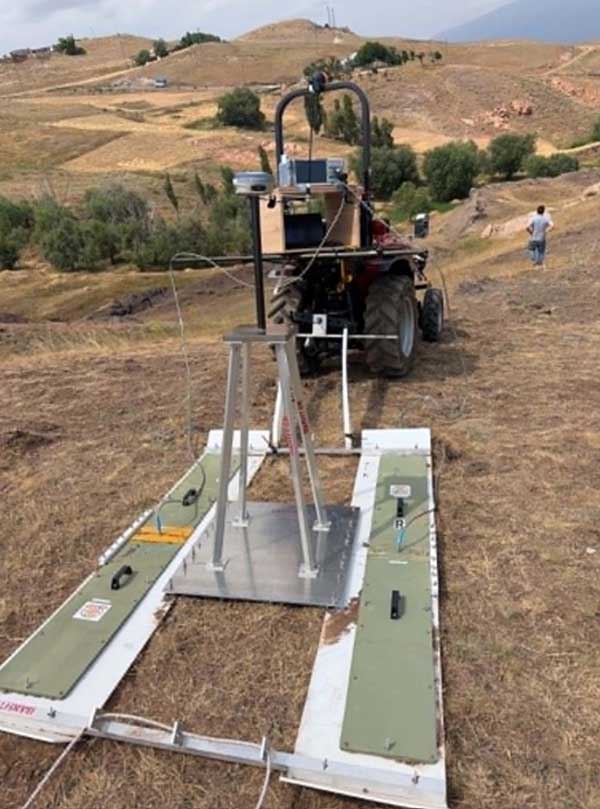
Rather than relying purely on surface impressions, contemporary investigators utilize state-of-the-art non-invasive technology to peer deep beneath the soil. High-resolution geophysical surveys—including Ground Penetrating Radar (GPR), Electrical Resistivity Tomography (ERT), and aerial LiDAR mapping—have revealed structured subsurface anomalies. These scans show linear alignments, symmetrical features, and chamber-like voids buried deep beneath the earth that diverge sharply from standard natural rock formations.
Inside the Noah’s Ark Research Project and Latest Findings
The meticulous work spearheaded by the Noah’s Ark Research Project is shifting the conversation from speculative myth toward empirical investigation. By employing non-destructive remote sensing alongside soil composition analyses, research teams have identified distinct organic distribution patterns within the boundary of the hull-like shape, compared with the surrounding barren mountainside.
A major breakthrough occurred during recent dry sonic core drilling operations, where field teams recovered fragments of charred and uncharred wood buried approximately 30 feet underground.
The presence of burned wood buried far beneath the surface has sparked deep intrigue among analysts. Ancient accounts describe the vessel as being thoroughly sealed inside and out with pitch—a highly flammable waterproofing agent—which could account for signs of burning caused by ancient human encampments, lightning, or localized volcanic activity over thousands of years. While skeptics maintain that natural geological folding created these boat-like contours, the convergence of anomalous underground structures, buried organic samples, and ancient pottery fragments keeps the scientific inquiry active.
Exploring the Evidence Firsthand
As technology advances, the convergence of historical geography, structural dimensions, and modern subsurface data offers a fresh, rigorous perspective on a narrative as old as civilization itself. The search for absolute answers continues to inspire interdisciplinary researchers worldwide.
To explore detailed field logs, view high-resolution subsurface scans, and stay updated on ongoing research operations in eastern Turkey, visit Noah’s Ark Scans.
For more related reading, view “Foxe: Voice of the Martyrs.”
Main image source: Thanksgiving Prayer after Leaving Noah’s Ark by Domenico Morelli (1901)
Photographs source: Noah’s Ark Scans